
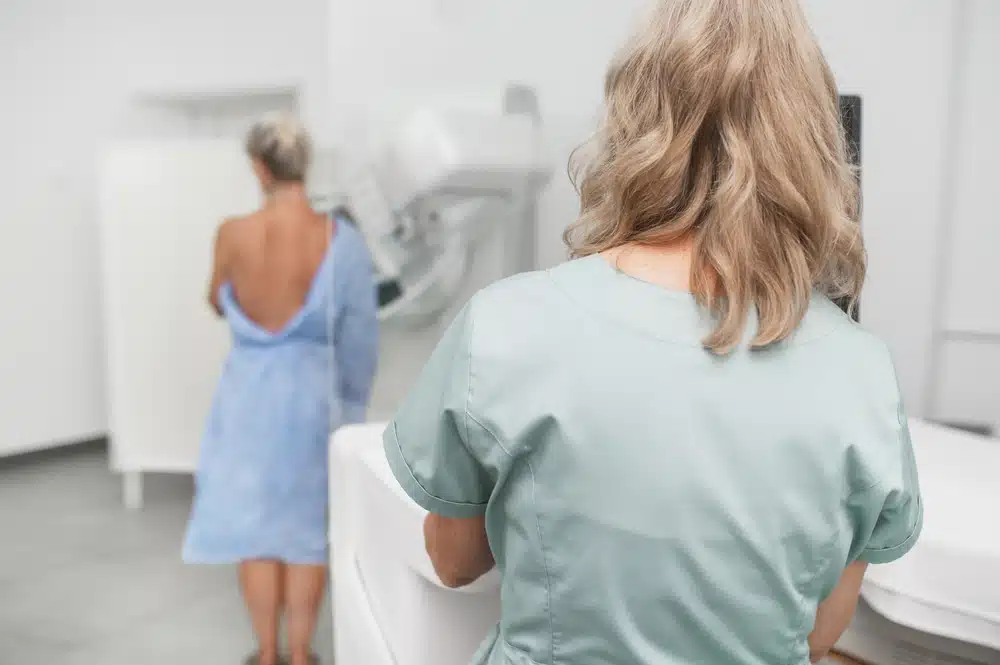
Knowing when to start having regular mammograms is something that every woman should know. Recommendations for when to start attending regular screenings vary between countries and medical organisations and, depending on your age, family history, and other risk factors, you may be required to start earlier than expected.
At Well Women, we recommend women begin annual mammography breast screening at 40 and encourage women who are at higher risk of breast cancer to begin yearly screenings from age 35.
Age, however, is only one piece of a larger picture. Understanding your personal health and potential risks can often help you and your healthcare provider decide when you should begin screening and how frequently you should have a mammogram.
What Does It Mean to Be at a Higher Risk?
Talking about your health, especially breast health, can be a sensitive experience, and discussing potential risks that can be life-changing can make this conversation even more difficult. It is completely understandable to have concerns, but knowing your risk factors can help you have an open conversation with your healthcare provider about your breast health.
Having a family history of breast cancer is one of the more common risk factors. Having one first-degree female relative who has been diagnosed with breast cancer can nearly double your risk. If two first-degree female relatives have been diagnosed with breast cancer, your risk is five times higher than average.
Besides family history and genetic factors, women may be at higher risk if they previously had chest radiation at a young age. Certain breast conditions can also increase a woman’s risk of developing breast cancer.
Picking up changes in your breast health early can make it easier to investigate them and start treatment if needed. To put this into perspective, 90% of patients survive post-diagnosis when breast cancer is detected in the early stages.
Personal Health Check
Despite being at a lower risk in your 20s, we cannot recommend enough that you start practising breast self-examination to familiarise yourself with the normal look and feel of your breasts. This allows you to better pick up on any potential problems and identify potential changes early.
Mammograms in Your 30s
For women in their 30s, routine mammograms are usually not recommended due to the lower risk. Younger women are more likely to have dense breast tissue, which can make mammograms harder to interpret.
That does not mean your breast health can simply be ignored.
If you notice a new lump, nipple discharge, changes in the skin or nipple, or another unusual change, you should speak to a healthcare professional rather than waiting until you reach the usual screening age. Depending on your age and circumstances, an ultrasound or another form of imaging may be more appropriate.
Starting Screening in Your 40s
As you enter your 40s, having regular mammograms becomes an important part of looking after your breast health.
Starting regular checks in your 40s is important because the likelihood of being diagnosed with breast cancer increases with age. According to the American Cancer Society, women aged 40 have a 1.6% chance of developing invasive breast cancer over the next 10 years*. That works out to around 1 in 62 women.
Once you start having mammograms, keeping up with your screening schedule is important. A mammogram gives your healthcare provider a picture of your breasts at that point in time. Having regular screenings also allows your healthcare provider to build a picture of your breast health over time, making it easier to spot changes that may need further observation or investigation.
Does Screening Still Happen in Your 50s and Beyond?
As you begin to get older, the likelihood of being diagnosed with breast cancer increases. Research by the American Cancer Society highlights that women in their 50s have a 2.5% chance of being diagnosed with breast cancer*.
This goes to show just how important it is to attend regular screenings in your 50s and beyond. We recommend talking with your healthcare provider to determine how often you should attend screenings. Keeping up with your recommended screening schedule can help you stay on top of your breast health as you get older.
There is no One-Size-Fits-All Answer
The right time to have a mammogram depends on more than your age. Factors like your family history, medical history and your personal health can influence when you need to start having regular mammograms.
No matter your age, if you notice something new or unusual with your breasts, speak to your healthcare provider.
Regular screening plays a part in making informed decisions about your health. Understanding your personal health, the potential risks and having discussions with your healthcare provider allows you to better plan for the future and gives you much-needed peace of mind.
* Data adapted from the American Cancer Society. Breast Cancer Facts & Figures 2024–2025, p. 2, Table 1: Ten-year Probability of Breast Cancer Diagnosis (2018–2019) and Death (2020–2022). Atlanta: American Cancer Society, 2024.